Tag: Costa Mesa Counselor

Which 5 Basics are Essential to Your Mental Health

Which 5 Basics are Essential to Your Mental Health

When clients are going through a difficult time, they often want to work through the stressors.  Of course.  However, I often redirect them to really focusing on the basics to create a stable platform from which to address what is happening.  Creating that stability makes 

Looking at Process Over Content Can Change Your Communication

Looking at Process Over Content Can Change Your Communication

Until I trained as a therapist, I never intentionally paid attention to what happens in the process of communicating with someone. Communication just happened. As I learned what process vs content meant, I realized how much information is embedded in the actual process of communication. 

How Often Should I Go To Therapy?

How Often Should I Go To Therapy?

Aside from “how long does therapy take?”, which was discussed last week, another common question is “how often should I be seeing my therapist?”

Again, it depends. So let’s talk about that.

What follows applies to those who are coming in for individual, family, couples, child or adolescent therapy.

In the Beginning

We recommend doing weekly sessions for 4-6 weeks regardless of whether you are being proactive or working on a specific challenge. If you are in crisis, you may need multiple sessions a week in order to stabilize the situation.

We recommend having those first 4-6 weekly sessions because two important things are happening.

One is you are getting to know your therapist, seeing how they work and how comfortable you feel working with them. You are sorting out if you can trust the guidance and insights that your therapist brings forward, if you find their responses and way of working helpful to you. If that trust is not there, you are not going to get the return on investment.

Second, your therapist is finding out all about you and what is bringing you to therapy. Your therapist is gathering information about your history, your family, your health, your support network and your current coping strategies through what you say and what you don’t say. Give your therapist the opportunity to do that because they are going to be WAY more effective that way.

Once you have some trust and good rapport built up and your therapist has a solid picture of what is going on with you, you guys can decide together what is going to be best in terms of session frequency.

Weekly Sessions

Weekly sessions are super helpful in the following situations:

  • you are working on building skills (coping, communication, social, mindfulness skills)
  • you are working through a specific challenge that is actively showing up in your daily life (anxiety, relationship difficulties including divorce, grief, behavioral issues, depression, trauma).
  • you are breaking old patterns and reprogramming thinking as well as behaviors because this requires repetition and a neutral party who can consistently support you in seeing how this is showing up in your life as well as how to shift.

Of course, there are other reasons, those are just some basic ones. Weekly sessions are most definitely an investment of your time and resources. And, doing this from the start will actually get you where you want to go faster. Doing biweekly sessions might actually fatigue you and feel like therapy is not working because progress may take longer or just might be more difficult. Better to fully invest and get your work in.

Biweekly Sessions

This is a good option when:

  • You have been in therapy some time and you are seeing progress like less anxiety, alleviated depression, decreased overwhelm, being able to practice the skills you are learning in session out in the real world.
  • You are being proactive about coming to therapy so there is nothing urgent, but you are doing some inner work on yourself and you are doing work between sessions that your therapist suggests or that you find supportive like meditation, journaling, establishing a fitness routine, etc.

As Needed Sessions

This is helpful at the following times:

  • You are a therapy veteran! You have been in therapy for a long time and your therapist knows you well so when something comes up and you schedule a session, your therapist knows how to support you through it. Sometimes people come in for one session, sometimes it’s a series of sessions to deal with a specific challenge.
  • You have an established relationship with a therapist that you created while being proactive. Your therapist is familiar with your history and goals and can be there for you when stuff comes up.

Multiple Sessions in One Week

This is usually indicated when:

  • You are in crisis, which means that your safety is in question or daily functioning is impaired (can’t stop crying, concerns about self harm, can’t go to work or school, etc).
  • You are in the middle of making a big decision or big transition in your life and you need support through that to stay healthy and afloat.

This is by no means a comprehensive list, just something to give you an idea of what to expect as you embark on or during your journey in therapy.

Know that this is an important conversation to bring up periodically with your therapist. We want to be mindful of your time and resources AND we want to make sure that your experience in therapy is effective and productive. Not something that drags on. Or conversely, doesn’t sufficiently address your goals, which then makes therapy less than effective.

Engage in making the decision about how often you come in for sessions together with your therapist, as their clinical recommendation is important to consider.

How Long Does Therapy Take?

How Long Does Therapy Take?

“How long does therapy take?” is a common question that comes up on an initial phone call with someone looking to start therapy. So I wanted to take a minute to answer them in case you have that question too. So, how long does therapy 

How Are Doing the Dishes and Dealing With Feelings Related?

How Are Doing the Dishes and Dealing With Feelings Related?

Not everyone is convinced that feelings are important. I get that. If you are one of those people who is not totally convinced that feelings are that big a deal, this is for you. I explain it this way often to my clients… How hard 

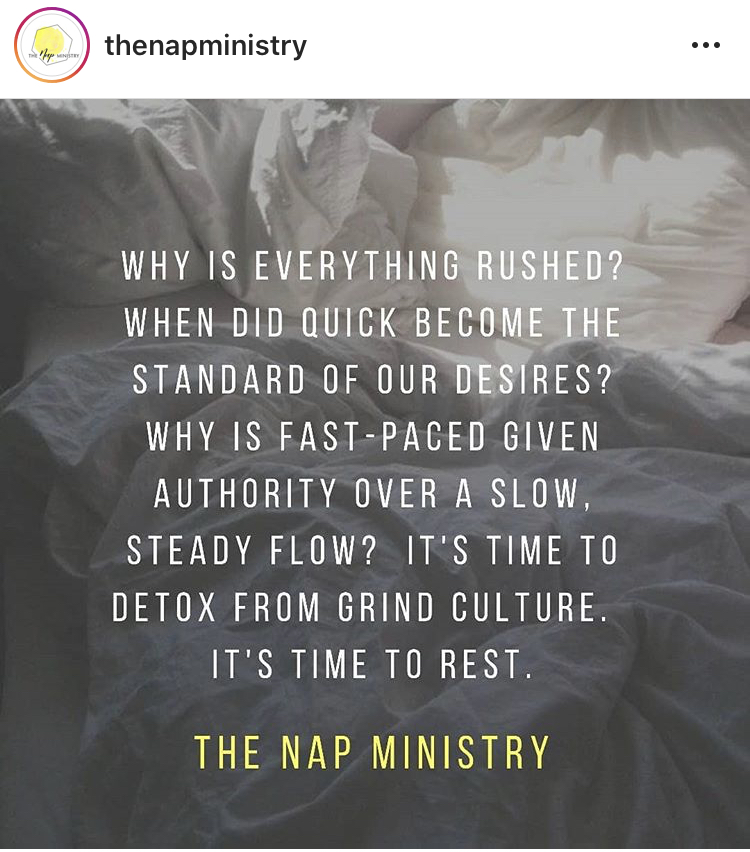
Is Rest At The Top of Your To Do List?  Why Not?

Is Rest At The Top of Your To Do List? Why Not?

We all know there is a point of diminishing returns when it comes to productivity. But do you act on the signals your body is giving you to take a break? It’s hard to do that, isn’t it?

While we all might ignore hunger, thirst or bathroom signals when we are busy, stopping to get those needs met seem more acceptable than stopping your to do list to rest.

There is a pervasive message about the importance of working over resting.

I certainly grew up with lots of messages around the importance of being a productive and contributing citizen of the world. Did you?

I know my father did. We were talking about it last night after seeing psychologist and mindfulness teacher, Tara Brach, speak on her new book Radical Compassion. It was like a revelation for him, recalling messages he got from his own family (all with the very best intentions) growing up. He brought up a memory of his father taking him to skid row as a teenager, telling him that is where he would end up if he did not dedicate himself to his studies. I know my mother experienced those same messages around being productive. And, of course, so did I.

In fact, work ethic has been the main contributor to my sense of self worth. The fact that I love what I do and want to do what I do makes that easier, but overworking is something I have had to wrestle with my entire adult life. And, I have to continue to keep my eye on it.

Working around the clock (whether that is in your home or in your career) is seen as a badge of honor. How much you accomplish is certainly seen as a badge of honor.

But at what cost?

If you are being the most productive person you know, are you also the most kind and connected to your loved ones? If you are being the most productive person you know, are you also the most healthy physically and mentally?

At the end of the day, what is actually most important to you? If it is other things (quality of connections/interactions, physical or mental well being, being present) over being the most productive, then it is good time to re-evaluate and find some space for yourself.

It’s a good time to work on making some peace with rest.

If you need some some science to ease you into that process of making peace with rest, read this short article about sleep and mental health (3 min).

When you are not getting enough rest or stuck in productivity mode, you are not in a level headed space. That means your experience of life and your internal world are much more chaotic when there may be nothing actually chaotic occurring.

Read: stress begets stress.

That’s not good for your nervous system, which means it is not good for your overall physical, mental or emotional health.

Of course, everyone has a different set point of productivity that is right for their system. Not having enough productivity in your life can be anxiety producing and depressing. So, it’s important to find the balance that works for you.

Do you know your stress signals? These can be used to your advantage by supporting you in finding that balance. Read more on how to do that here and here.

As always, if you need help undoing some of this programing around productivity, we are happy to help. Contact us and we will connect you with a therapist that can offer that support.

What is your favorite form of rest?

A nap? Going to the ocean? Drinking tea? Reading?

**Disclaimer: One Heart Counseling Center is not affiliated with The Nap Ministry or any of its messaging. We just love their messages about reinforcing the importance of rest in and of itself.

Telltale Signs of Burnout: the best list I’ve seen

Telltale Signs of Burnout: the best list I’ve seen

Burnout is real. Not only is it miserable for you, it’s toxic for your health and your relationships. You know this already. What you might not know about is these four signs that are about real life. Be honest with yourself when you look at 

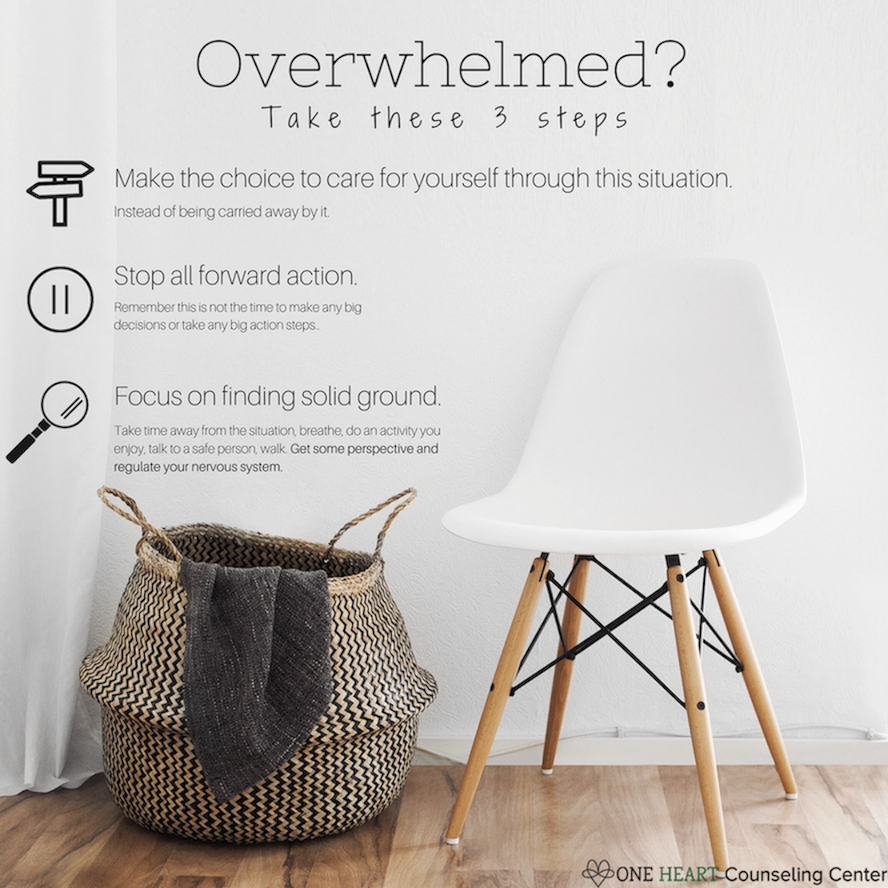
Overwhelmed?  Take these 3 steps.

Overwhelmed? Take these 3 steps.

It is that time of year. So much is going on and coming up. And, that is natural. When overwhelm hits, it feels like you need to do all the things. What actually needs to happen is taking a step back. Not much good comes